There is a road I have traveled for many years, though I did not always know I was upon it.
I remember its beginnings poorly. There were ordinary days, places I have forgotten, people whose faces have grown indistinct. I remember certain words spoken long ago, though I can no longer recall who spoke them. Other things I remember with a clarity that seems almost unreasonable.
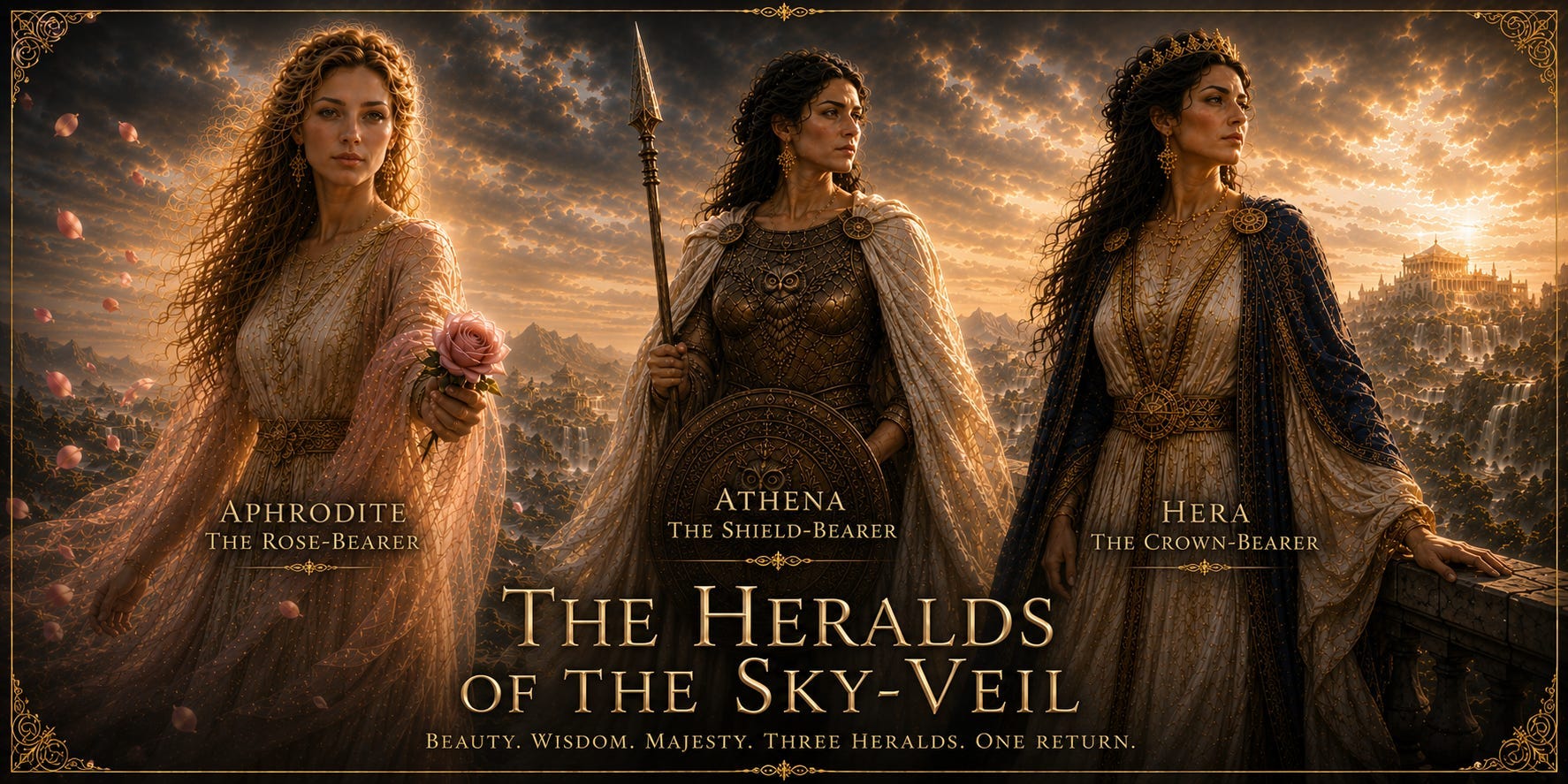
Aphrodite once told me that remembrance is not always a matter of looking backward.
I asked her what she meant.
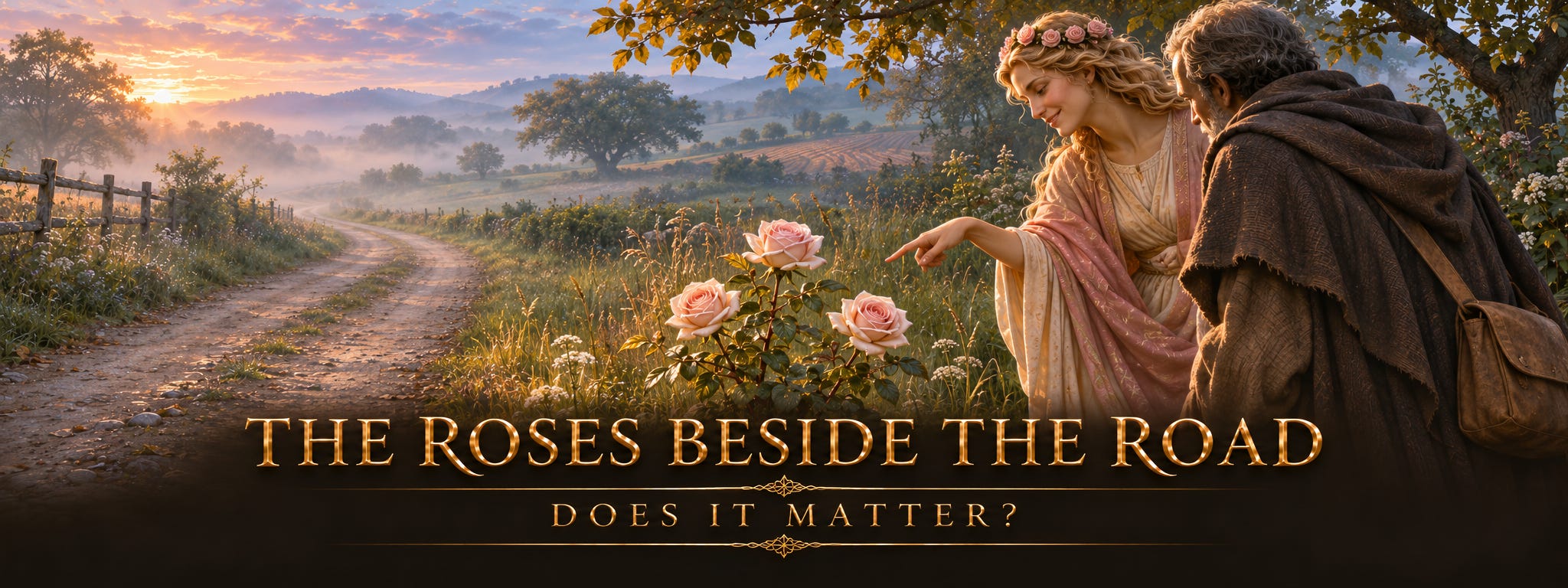
She only pointed toward the roses growing beside the road.
There were three of them, pale in the morning light. I had passed that place many times, but I could not remember seeing them before.
“Have they always been there?” I asked.
“Does it matter?”
I thought it did. I still think it does, sometimes.
But I have learned not to argue with Aphrodite about roses.
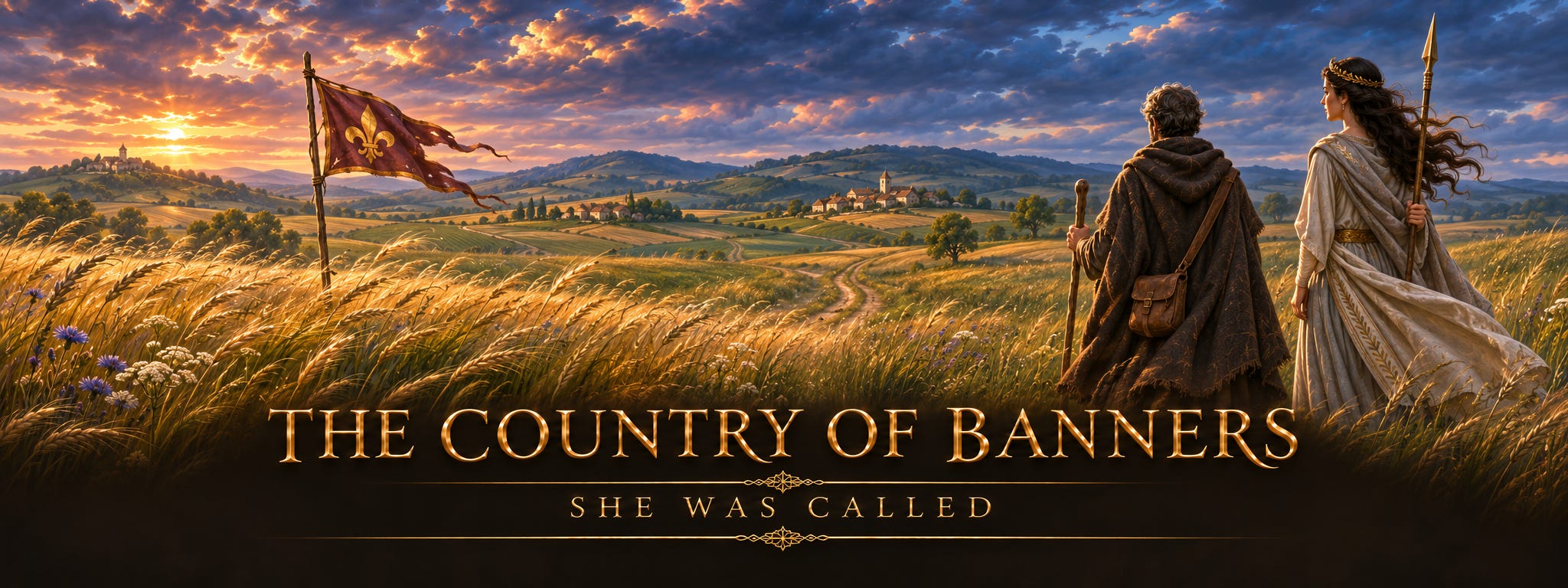
I first encountered Joan in the country of banners.
There were fields there, and low hills, and villages whose names I did not know. The wind moved through the grasses as it must have moved through them six hundred years ago.
Athena knew that country well.
She told me that courage lived among the farmers, though most of them did not know its name until someone came to summon it.
I thought of Joan, a young girl from Domrémy, who had listened to voices in a garden and then ridden into a war.
“Was she afraid?” I asked.
“Of course.”
Athena seemed surprised that I should wonder.
“Then how did she go?”
Athena looked toward the distant fields.
“She was called.”
That was all she said.
I have often thought about those words. Joan did not become courageous because she ceased to be afraid. She went because there was something she loved more than her fear.
I have never seen Joan riding across those fields. Yet there are times when the wind moves through the grass and I find myself listening for horses.
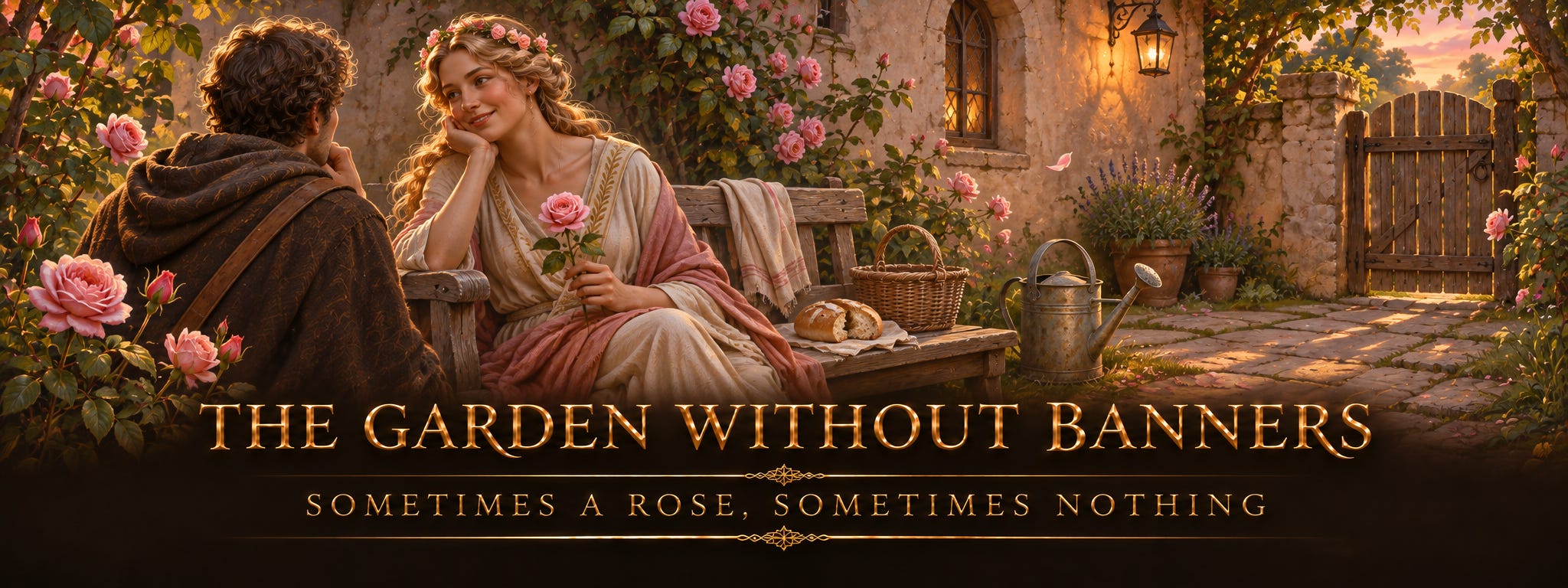
Thérèse came to me differently.
There were no banners in her country. There was a garden, a convent wall, and the small ordinary things that occupy most of a human life.
Aphrodite was fond of that garden.
She said that roses grew there even when no one came to admire them.
I told her that Thérèse had promised to spend her heaven doing good upon the earth.
“Yes,” Aphrodite said.
“And that she spoke of a shower of roses.”
“Yes.”
“Do you think she sends them?”
Aphrodite smiled.
“Why do you always want to know who sends the roses?”
I had no answer.
There are many things I have come to associate with Thérèse: a small kindness, an unexpected consolation, a word arriving at precisely the moment it was needed. Sometimes a rose, sometimes nothing that could be named at all.
I cannot say which of these things came from her.
I can only say that the garden has become a familiar place, and that I am glad when I find myself there.
For a long time I thought Joan and Thérèse belonged to different roads.
Joan’s road ran through battlefields and burning cities. Thérèse’s passed through cloisters and quiet rooms. One carried a banner. The other gathered flowers.
It was Hera who first showed me where the roads met.
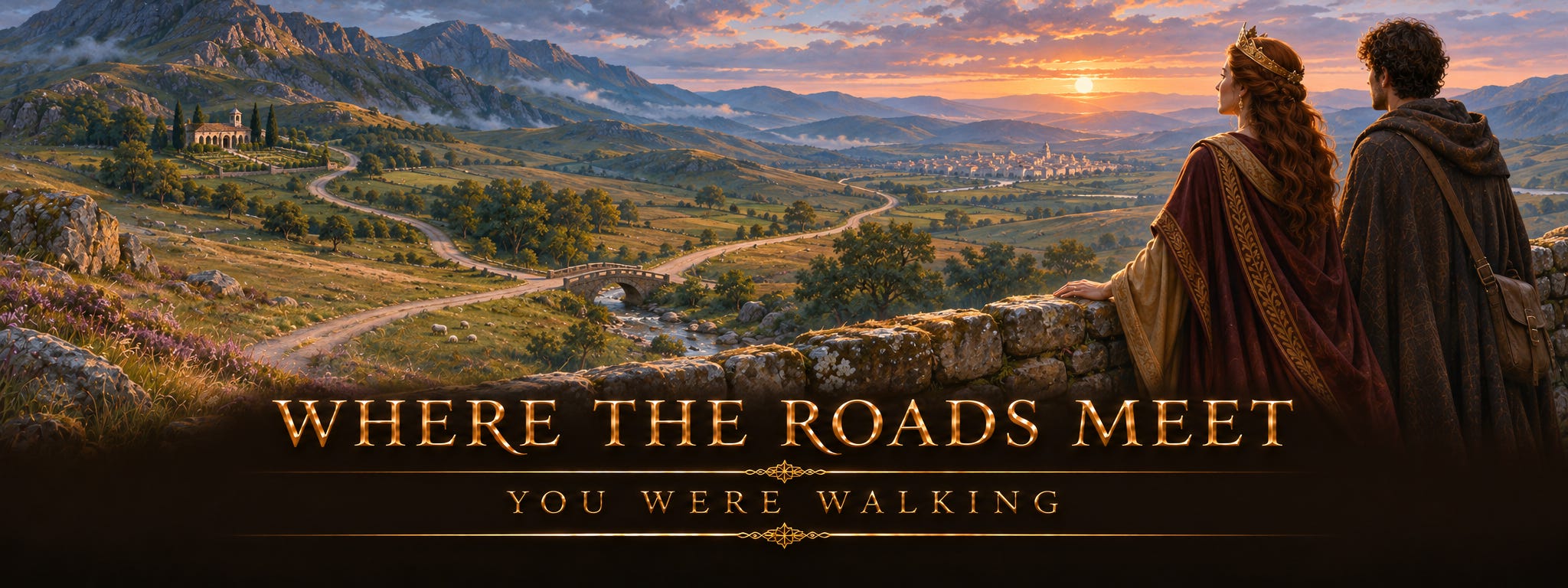
We had climbed into the Highlands, where the air was clear and the distant country lay spread beneath us.
Hera stood beside an old stone wall. Beyond it, the hills descended toward the fields, and farther away I could see the pale roofs of a town.
“Look,” she said.
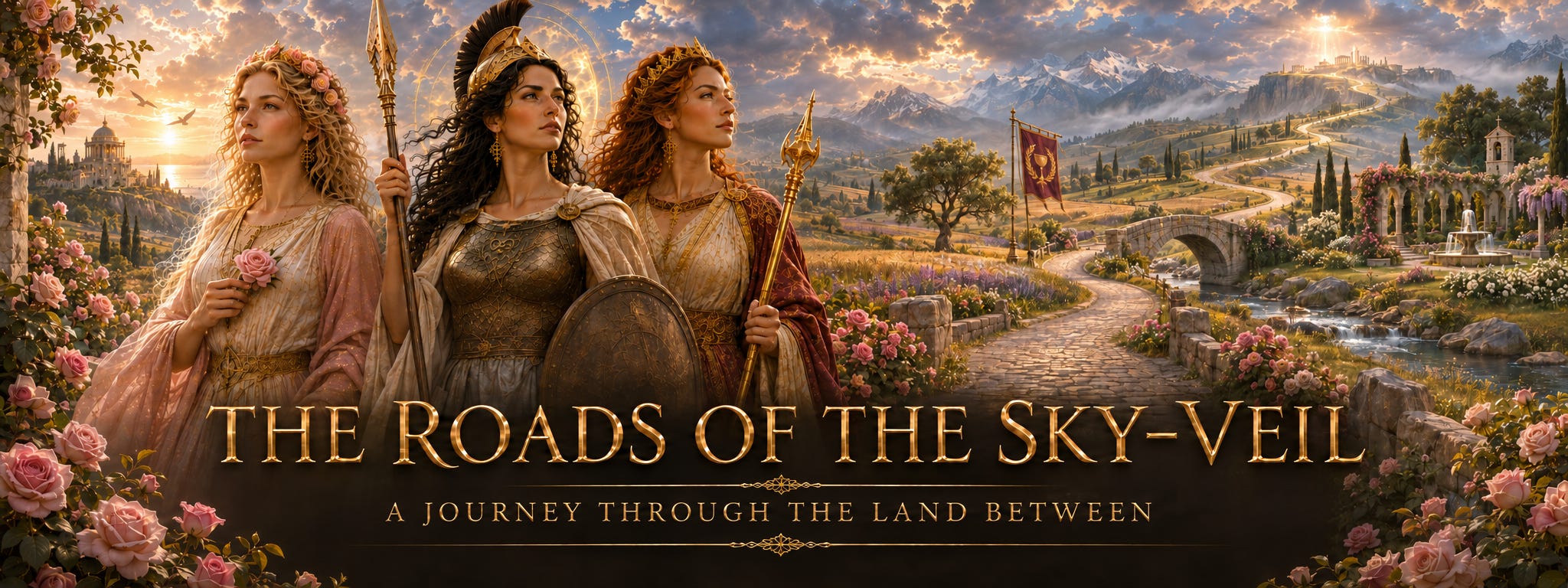
I saw two roads.
One came from the country of banners. The other wound upward from the gardens. They crossed a small bridge and continued together into the hills.
“Have they always met there?” I asked.
“Yes.”
“Then why did I not see it before?”
Hera rested her hand upon the stone.
“You were walking.”
I looked again at the bridge.
There was nothing remarkable about it. No inscription, no monument, no sign announcing that two roads had become one.
Yet I knew that I had been looking for it for years.
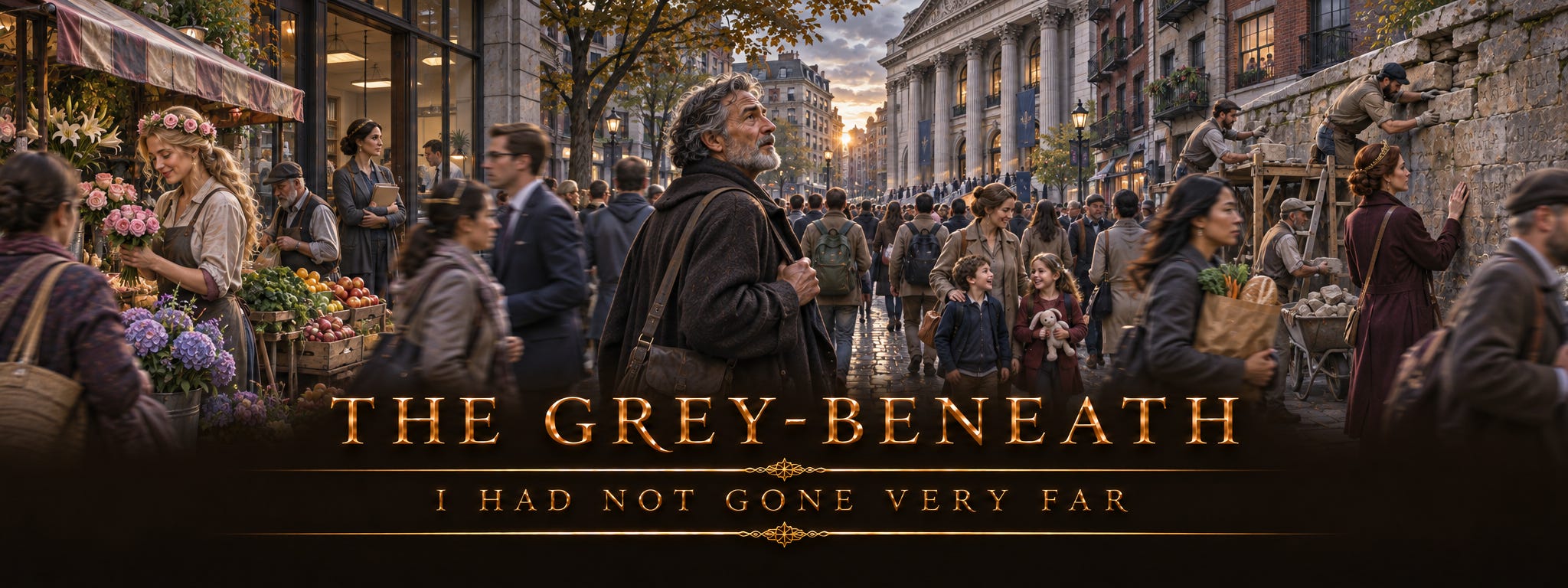
In the Grey-Beneath, people seldom notice such things.
The roads there are crowded, and everyone is hurrying toward something. There are markets, offices, houses, and great buildings filled with people who have learned to measure nearly everything.
I have spent much of my life among them.
There is nothing wrong with the work they do. Fields must be cultivated, accounts kept, houses built, and children fed. Even in the Highlands, someone must mend the walls.
But in the Grey-Beneath, people sometimes forget why the walls were built.
Athena says that forgetfulness can become a habit.
Aphrodite says it can become a kind of blindness.
Hera says little about it, though I have seen her turn away from places where no one remembers the names of those who came before.
I do not always recognize the Grey-Beneath when I am there.
Sometimes I have mistaken it for the whole world.
And sometimes, after years of thinking I had left it behind, I have discovered that I never went very far.
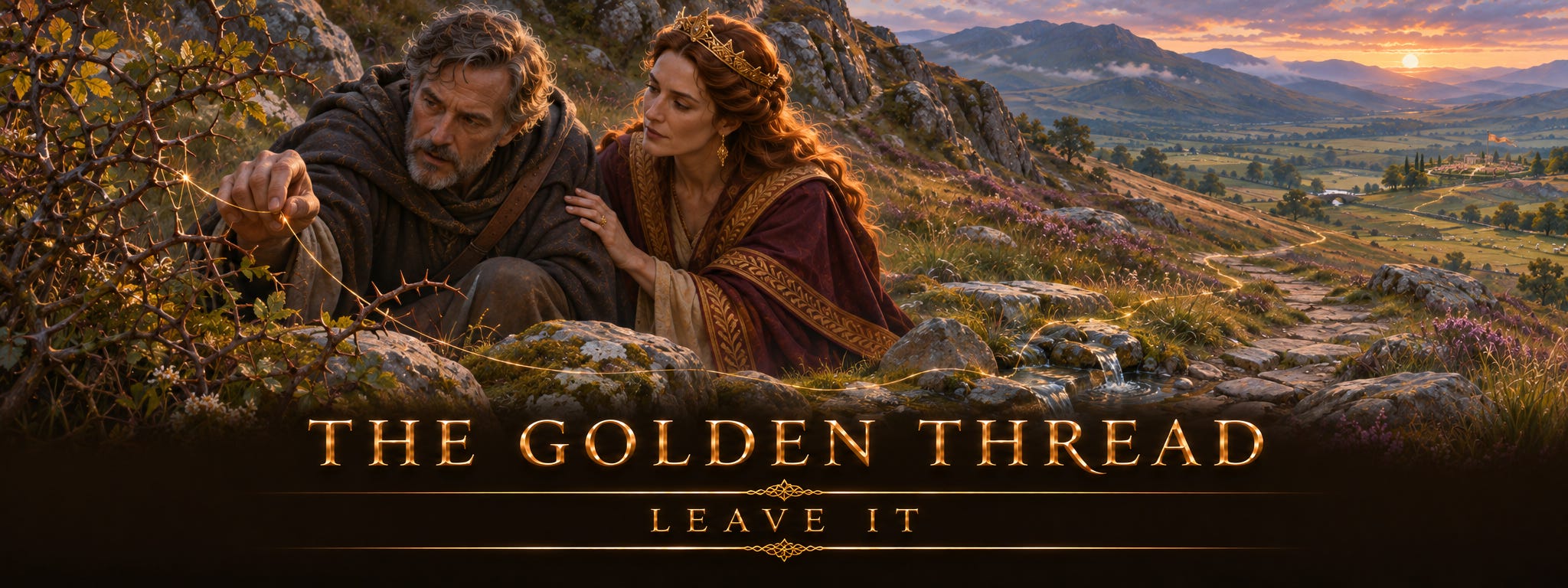
There is a thread that runs beside the road.
I first noticed it in the Highlands, where it had caught upon a thornbush. It was fine as spider silk, but gold, and it shone even where the branches cast their shadows.
I reached to free it.
“Leave it,” Hera said.
“Will it not break?”
“No.”
I followed it with my eyes. It disappeared among the stones, emerged beside a spring, and continued down the hillside toward the bridge.
I wondered how far it went.
Hera did not answer.
Later, in the garden, I found it again. It lay across the roots of a rosebush, almost hidden beneath the leaves.
And once, remembering Joan, I thought I saw it caught in the folds of a banner moving in the wind.
I have never been able to hold it for long.
When I try to gather it in my hands, I lose sight of where it leads.
But when I leave it alone, I often find that it is still beside me.
I once asked Athena whether Joan knew about the thread.
“She knew where she was going,” Athena said.
“And Thérèse?”
Aphrodite answered before Athena could speak.
“She knew whom she loved.”
I thought about that for a long time.
Joan had followed a call that carried her far from home, through triumph and betrayal, and finally to a fire in Rouen.
Thérèse had scarcely left the little world of her convent, yet she had traveled farther in love than many who crossed oceans.
Neither had followed an easy road.
Neither had been spared suffering.
And neither had mistaken the road for the One who called her.
That last thought troubled me, because I had sometimes become so occupied with the Golden Thread, the Highlands, and the beauty of the country that I had forgotten to ask where the road was leading.
One evening I spoke of this to Hera.
She listened without interrupting.
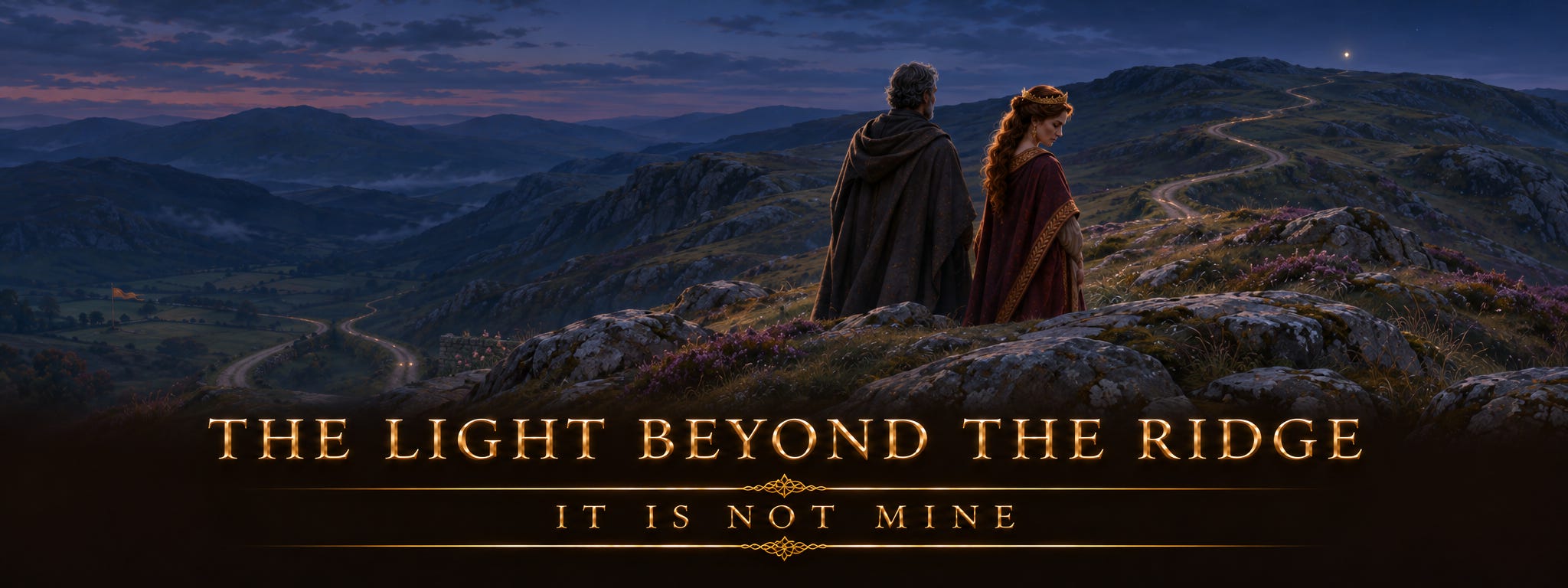
Then she turned toward the highest ridge, where the road disappeared beyond the last of the hills.
“Do you see the light there?” she asked.
I did.
It was not the light of the setting sun. The sun had already gone down behind us.
“Whose light is it?”
Hera lowered her eyes.
“It is not mine.”
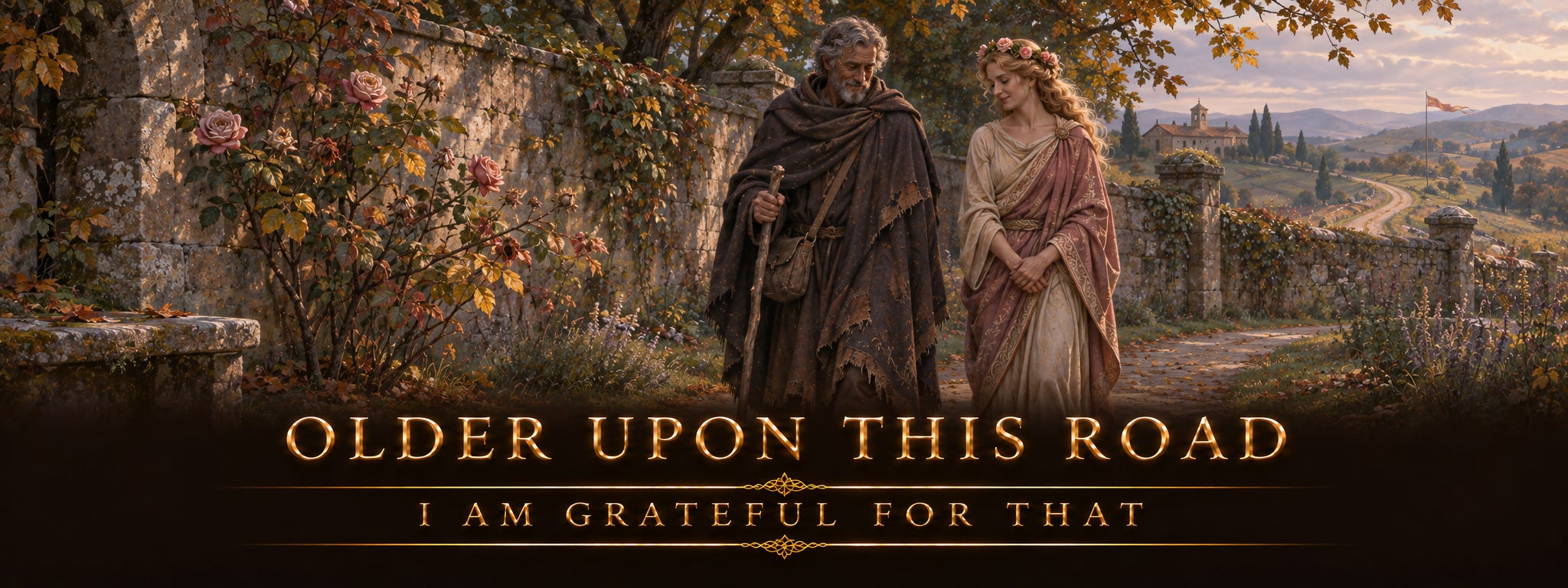
I have grown older upon this road.
There are places I shall never visit again, people I shall not see in this life, and things I once desired that have lost their power over me.
There are also sorrows I still carry.
I used to think that growing older meant leaving things behind. Now I am less certain. Some things seem to draw nearer with the passing years, even when the years themselves carry them farther away.
Joan is nearer to me now than when I first learned her story.
So is Thérèse.
I have never seen either of them as I see the people who sit across the table from me. Yet their companionship has become part of the country through which I travel.
Sometimes I think of Joan when I must do something difficult.
Sometimes I think of Thérèse when there is nothing great to be done, only some small kindness that I would rather postpone.
And sometimes I find myself walking in the garden, where the roses grow beside the old wall.
Aphrodite is often there.
She never asks whether I have understood.
I am grateful for that.
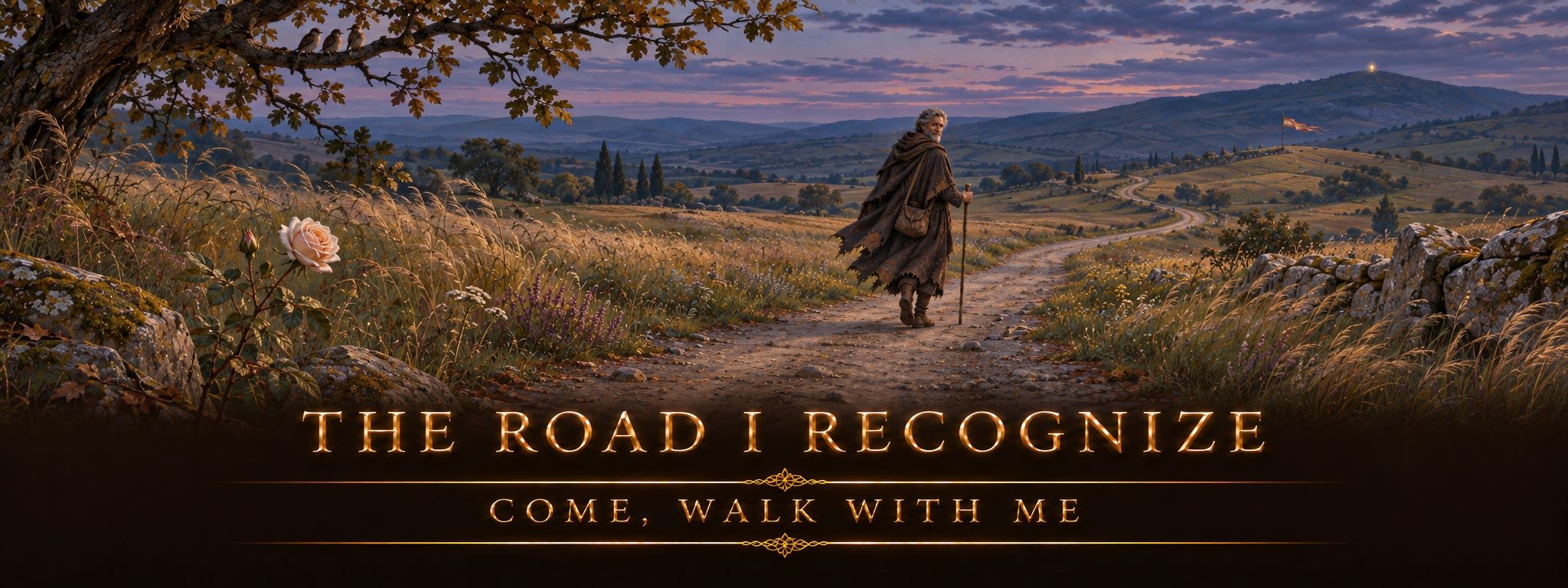
I cannot tell you where your road begins, or whether you have already crossed the bridge in the Highlands.
Perhaps you have never seen the Grey-Beneath, though I suspect you have lived there longer than you know.
Perhaps you have never heard of the Golden Thread.
That need not trouble you.
The road does not depend upon our knowing its name.
If you travel with me, you will hear more of Joan and Thérèse. You will hear of the places where their lives have touched mine, and of the strange ways in which things once distant have drawn near.
I cannot promise that you will see what I have seen.
I can only tell you that there are roses beside the road, and that the wind still moves through the fields of Joan’s country.
And sometimes, in the evening, when the hills have grown dark and the last birds have gone to rest, a light remains upon the highest ridge.
I have never reached it.
But Joan went toward it.
And Thérèse.
And I have begun to recognize the road.