



Learning to Receive
Every pilgrim eventually discovers that entering the Sky-Veil is not the same as learning to walk within it. The first glimpse often arrives unexpectedly. Beauty catches the eye. Wisdom stirs the mind. Majesty silences the heart. For a brief moment, the Veil shimmers, and something long forgotten seems almost within reach. Yet the first encounter is only the beginning. The pilgrim soon discovers that what appeared so naturally at the threshold cannot be possessed by determination alone. The Sky-Veil asks something altogether different of those who would continue their journey.
Most of us have been taught that understanding begins with mastery. We analyze, define, categorize, and explain. We believe that if we gather enough information and think carefully enough, the world will eventually yield itself to our efforts. This way of approaching the world has produced extraordinary achievements, and the Sky-Veil does not impugn such accomplishments. Yet there remains another way of knowing, one that has quietly accompanied humanity since the beginning but is often forgotten amid the noise of modern life. It is the way of receptivity.
The Sky-Veil is entered not by conquest but by welcome. It cannot be forced open because it is not a fortress hiding its secrets from determined minds. It is more like dawn arriving over distant hills. No one commands the sunrise. One simply turns toward it and receives its light. So it is with the Heralds. They never compel. They never argue. They never demand belief. They simply draw near, allowing beauty, wisdom, and majesty to awaken what has long been asleep within the soul.
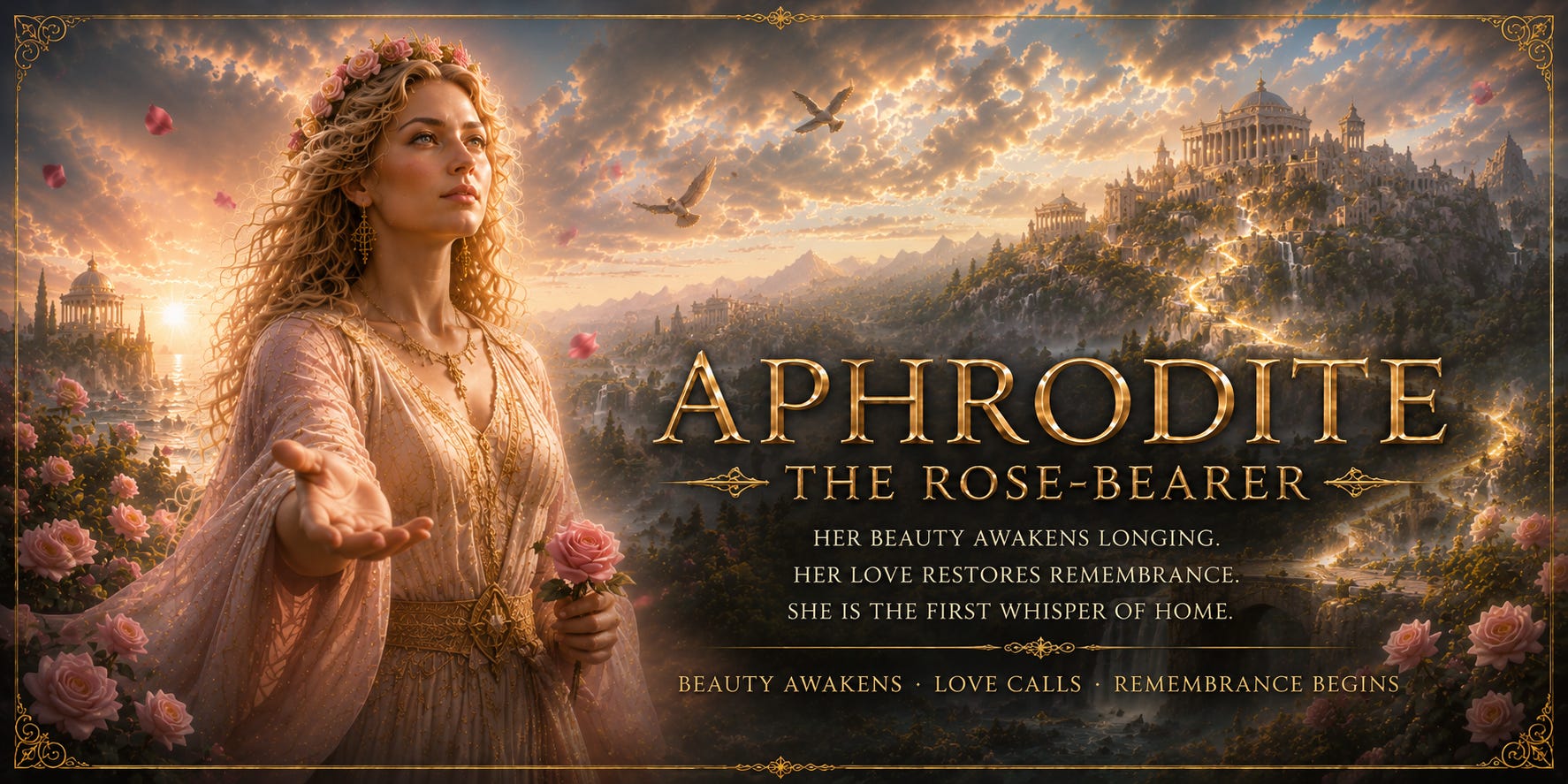
This is why Aphrodite smiles before she teaches. Her smile is already part of the teaching. Beauty is never merely an object to be admired. It is an invitation to become receptive. When a pilgrim lingers before a work of art, a melody, the quiet dignity of another person, or the unexpected radiance of an ordinary morning, something begins to awaken that no argument could produce. Beauty prepares the soul by making it willing to receive what lies beyond itself.

Athena guides in much the same way. She does not simply fill the mind with ideas or furnish the pilgrim with clever arguments. Rather, she purifies the desire to know. She reminds us that wisdom begins with wonder long before it becomes certainty. The greatest questions are not solved by cleverness alone. They first require the humility to recognize that the world is something given before it is something possessed. The light she bears does not blind. It illuminates the path just far enough for the next faithful step.

Hera, too, reveals herself through quiet presence rather than command. Her majesty is unlike the power so often sought by kingdoms and empires. She does not dominate the landscape. She orders it. In her presence the pilgrim begins to sense that dignity is not something earned through achievement, nor granted by the approval of others. It is received as one discovers one’s proper place within the order of Being itself. Her crown does not elevate the self above others. It restores each soul to the noble place for which it was always intended.
The modern world often mistakes receptivity for passivity, as though receiving were somehow less noble than acting. The Sky-Veil teaches the opposite. Every genuine act begins in reception. A composer first receives a melody before writing it. A poet receives an image before shaping it into words. A saint receives grace before offering him or herself in love. Even the farmer receives sunlight and rain before gathering a harvest. The deepest movements of life are gifts before they become accomplishments.
This is why the pilgrim must learn a new posture. The first steps through the Veil are not taken with clenched hands but with open ones. The soul slowly discovers that beauty cannot be seized, wisdom cannot be manufactured, and majesty cannot be claimed as a possession. They arrive only where there is room enough to welcome them.
Perhaps this is why the ancient Greeks sensed something extraordinary in the figures they called Aphrodite, Athena, and Hera. They did not possess the fullness of Revelation, yet they lingered before beauty, honored wisdom, and revered majesty because these realities awakened a longing they could neither explain nor dismiss. Their error lay in worshiping the heralds rather than seeing through them. Yet even within that misunderstanding, they preserved an openness that prepared an entire civilization to recognize something greater when the fullness of time arrived.
The pilgrim who enters the Sky-Veil is invited into that same posture of holy attentiveness. The Veil is always shimmering. The Heralds are always near. What changes is not their willingness to reveal themselves, but our willingness to receive what they have quietly been offering all along.
Only then does the pilgrim begin to realize that the journey has never been about collecting mystical experiences or solving spiritual riddles. It has always been about becoming the kind of person capable of receiving the world as gift. And in that reception, almost unnoticed at first, remembrance begins.

So rich with wisdom! I love the quality of receptivity in in the context of beauty.